How Often Should a Strata Pool Be Serviced and Tested in NSW?

FAM Team
Nov 3, 2026
9 min read
A shared pool works harder than almost any other part of a building. Dozens of residents use it, the sun and rain hit it every day, and on a hot January weekend it can see more swimmers in an afternoon than a backyard pool sees in a month.
That's why the most common question we hear from strata managers and committees is a simple one: how often does our pool actually need servicing?
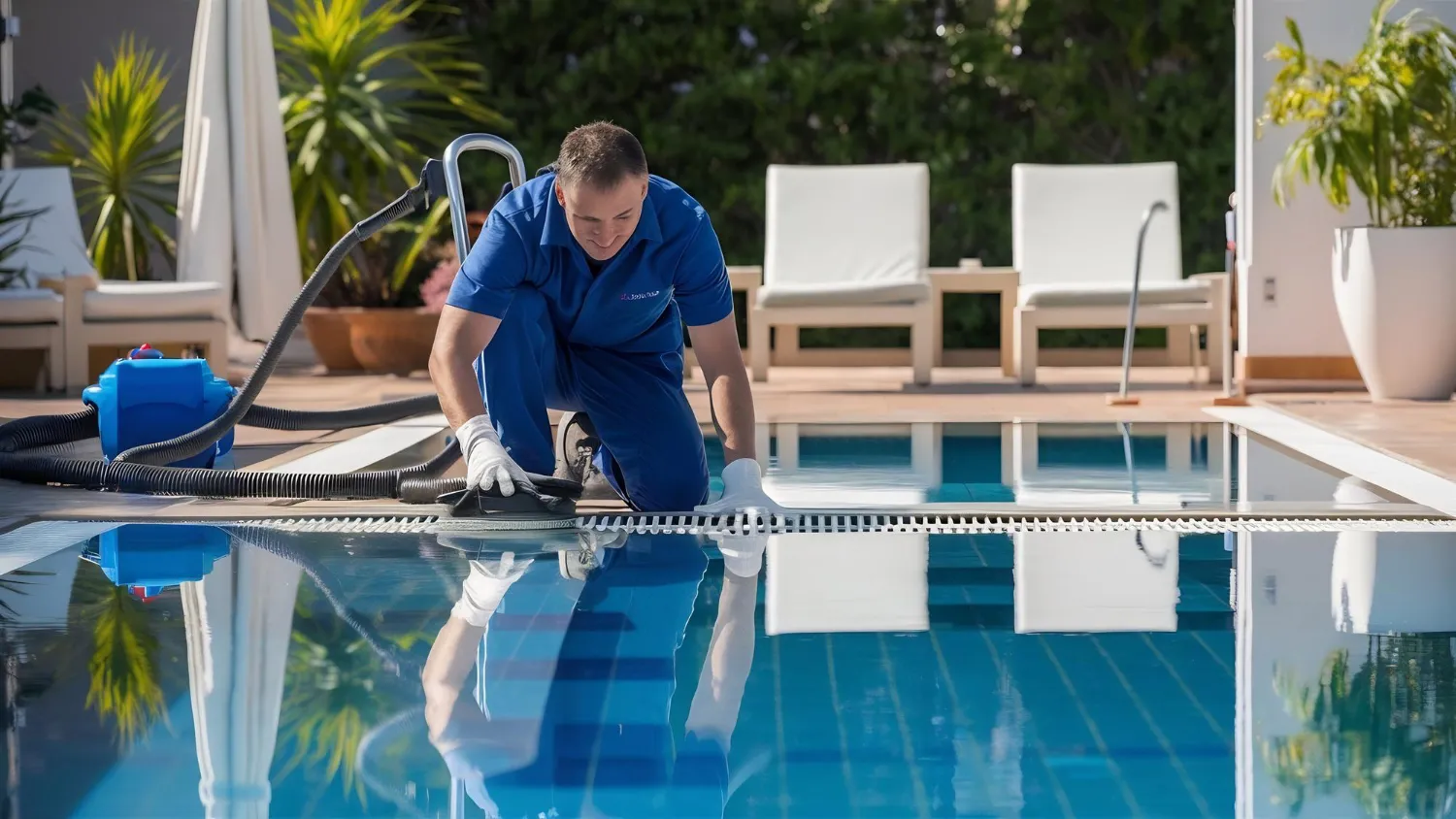
The short answer: most apartment pools in Sydney need a professional service at least once a week, with extra visits in summer or when the pool is heavily used. The right schedule depends on your pool, though, and what happens at each visit matters as much as how often it happens.
This guide explains what the NSW rules say, the water standards worth aiming for, a realistic servicing schedule and the records your owners corporation should keep.
First: is your strata pool a "public pool"?
NSW has specific operating rules for public swimming pools and spa pools under the Public Health Act 2010 and Schedule 1 of the Public Health Regulation 2022. Occupiers of those pools must notify their local council and meet set requirements for disinfection, testing and record keeping.
Under section 34 of the Public Health Act 2010, the definition of a public pool includes pools to which the public is admitted, including pools at hotels, holiday accommodation and private residential premises used for commercial purposes.
A residential strata pool used exclusively by residents and their private guests will generally not be classified as a public swimming pool under the Act. However, the position may differ where a building includes serviced apartments, holiday accommodation, hotel facilities or other commercial uses. Where the classification is uncertain, the owners corporation should seek written clarification from its local council or independent legal advice.
Even when the public pool rules don't apply, the NSW Health water quality guidelines are the best benchmark available. NSW Health published new Guidelines for Managing Water Quality in Public Swimming Pools and Spa Pools on 12 August 2026, replacing the 2013 advisory document. They're what a careful owners corporation would point to if a resident ever got sick or a claim was made.
Who is responsible for the pool?
Under section 106 of the Strata Schemes Management Act 2015, the owners corporation is generally responsible for properly maintaining and keeping common property in good and serviceable repair. This includes shared swimming pools and associated equipment where they form part of the common property. The legislation provides a limited exception for particular items through a special resolution, subject to specific conditions, including that safety is not affected.
Pool safety is a separate obligation. All pools must be on the NSW Swimming Pool Register. Under section 22B of the Swimming Pools Act 1992, councils must operate inspection programs providing for swimming pool barrier inspections at least once every three years for pools located on premises with more than two dwellings or tourist and visitor accommodation. Pools with a valid certificate of compliance or relevant occupation certificate are excluded from this mandatory inspection program.
In practice, the strata manager organises it, the committee approves it, and a pool professional does the work and keeps the records.
The water standards to aim for
These are the requirements for public pools in Schedule 1 of the Public Health Regulation 2022. They're also a sensible target for any shared residential pool.
Parameter | Requirement (chlorine-disinfected pools) |
|---|---|
Free chlorine, outdoor pool | Minimum 1.0 mg/L |
Free chlorine, outdoor pool, when pH is above 7.6 | Minimum 2.0 mg/L |
Free chlorine, outdoor pool using cyanuric acid (stabiliser) | Minimum 3.0 mg/L |
Free chlorine, outdoor pool using cyanuric acid, when pH is above 7.6 | Minimum 4.0 mg/L |
Combined chlorine | Maximum 1.0 mg/L |
pH | 7.0 – 7.8 |
Total alkalinity | 80 – 200 mg/L |
Cyanuric acid | Maximum 50 mg/L (outdoor pools only) |
For completeness, the Regulation also specifies:
Indoor pools: free chlorine minimum 2.0 mg/L, increasing to 3.0 mg/L when pH exceeds 7.6.
Spa pools: free chlorine minimum 2.0 mg/L, increasing to 3.0 mg/L when pH exceeds 7.6.
Bromine-disinfected pools have different requirements from chlorine.
Source: Public Health Regulation 2022, Schedule 1; NSW Health Guidelines for Managing Water Quality in Public Swimming Pools and Spa Pools (2026).
A clear-looking pool isn't the same as a safe one. Water can be crystal clear and still have too little free chlorine to deal with germs brought in by a busy weekend. That's why regular, accurate testing matters more than appearance.
Testing: what the law requires vs what we recommend
It's worth separating two things that often get mixed up.
What the Regulation requires for public pools. Under Schedule 1 of the Public Health Regulation 2022:
Pools with a continuous metered dosing system must have disinfectant and pH manually tested daily before opening.
Pools with an automated dosing system must have readings recorded before opening and during use, with a manual test every day.
Alkalinity must generally be tested daily, with a specific monthly-testing exception for pools using liquid chlorine or carbon dioxide-based pH control.
Cyanuric acid must be tested weekly when used.
Testing must be increased when circumstances require it.
Records of mandatory test results must be kept for at least six months.
What we recommend for residential strata pools. A residential strata pool that isn't a public pool doesn't carry those daily statutory testing requirements. For most apartment pools in Sydney, we recommend a professional service at least weekly, with water tested and balanced at every visit, and extra visits when the pool is busy (see the schedule below).
A realistic servicing schedule for a Sydney apartment pool
Every building is different, but this is the schedule we'd typically start with for an outdoor strata pool, before adjusting it after inspecting the site.
How often | What happens |
|---|---|
Every visit (at least weekly) | Test and balance free chlorine, pH and alkalinity · skim, brush and vacuum · empty skimmer and pump baskets · check pump, filter and chlorinator · record results in the logbook |
Extra mid-week visit (summer, school holidays, heavy use) | Water test and chemical top-up · quick clean · equipment check |
Monthly | Test cyanuric acid and calcium hardness · check filter pressure and backwash or clean filter as needed · inspect gates, latches and signage and report issues |
Every 3–6 months | Deep clean of filters and cells · check salt chlorinator cell for scale · review equipment condition |
Yearly | Full equipment and condition report for the committee's budget and capital works planning |
When to increase servicing:
Summer heatwaves, when warm water and UV burn through chlorine fast
After heavy rain or storms, which dilute chemicals and wash debris in
After big events, like a building BBQ or a busy long weekend
If the pool has a heater, because warmer water needs more attention
If there's a spa as well. Spas need higher disinfectant levels and closer attention than pools.
What records should your owners corporation keep?
If a resident complains, a claim is made or council inspects the barrier, records are your best protection. They show the pool has been properly looked after.
For public swimming pools, Schedule 1 of the Public Health Regulation 2022 requires records of prescribed test results to be retained for at least six months. Each test record should include:
Date and time of each test
Disinfectant (chlorine) level
pH
Total alkalinity
Name of the person who did the test
For residential strata pools, we recommend that owners corporations retain water-testing records, maintenance reports, invoices, repair documentation and relevant correspondence for at least 12 months. A longer retention period may be appropriate depending on the building's circumstances and applicable legal obligations.
Ask your pool provider for: a log after every visit, and a summary the strata manager can file or table at committee meetings.
Signs your current servicing isn't enough
Residents report cloudy or green water, or a strong chlorine smell
The pool goes green after rain or a hot weekend
There are no written test results, or only "all good" notes
Different technicians every visit, with no consistent records
Repairs are discovered by residents, not reported by the provider
Equipment keeps failing without any warning or advice
Any of these usually means the pool isn't being serviced often enough, or isn't being tested properly when it is.
A quick checklist for strata managers
Is the pool common property, and is it on the NSW Swimming Pool Register?
Is anything in the building used commercially (serviced apartments, holiday accommodation, short-term lets) that could change how the pool is classified? If unsure, ask council in writing.
Is the pool serviced at least weekly, with extra visits in summer?
Are water tests recorded every visit, with the date, results and technician's name?
Are records kept for at least 12 months and easy to produce?
Are barrier, gate and CPR sign issues reported promptly?
Do repairs come with a written quote the committee can approve?
Water quality and pool barrier safety are two separate areas of pool management. A professional pool maintenance service may identify visible issues with gates, latches, fencing and signage, but this does not replace a formal pool barrier inspection by an appropriately qualified inspector or council.
How FAM looks after strata pools
We service apartment and strata pools across Sydney with the same technician every visit, water testing recorded on professional digital testing devices, visual checks of fences and gates, and quotes before any repair, so committees can approve work properly. We can look after several buildings for one strata manager and invoice you directly.
If you manage a building and aren't sure your pool's schedule is right, we're happy to inspect it and recommend one.
See our strata pool care → or get a free quote →
This article is general information, not legal advice. Requirements can change and may depend on how your building is used. Check with your local council or a strata lawyer for advice about your scheme.
Sources
NSW Legislation — Public Health Act 2010, particularly section 34 (definition of public swimming pool and spa pool)
NSW Legislation — Public Health Regulation 2022, particularly Schedule 1 (water quality, testing, operating and record-keeping requirements)
NSW Legislation — Strata Schemes Management Act 2015, section 106 (owners corporation responsibility for common property maintenance)
NSW Legislation — Swimming Pools Act 1992, section 22B (council swimming pool inspection programs)
NSW Government — Owning a pool or spa: your obligations
NSW Health — Public swimming pools and spa pools
NSW Health — Guidelines for Managing Water Quality in Public Swimming Pools and Spa Pools (published 12 August 2026)
“A clear pool isn’t always a safe one. Regular servicing, accurate testing and proper records are what protect residents and the owners corporation.” – FAM Team