Hotel & Serviced Apartment Pools in NSW: What Managers Need to Know About Compliance

FAM Team
Nov 3, 2026
10 min read
For guests, the pool is a highlight. For a hotel or serviced apartment manager, it's also a legal responsibility.
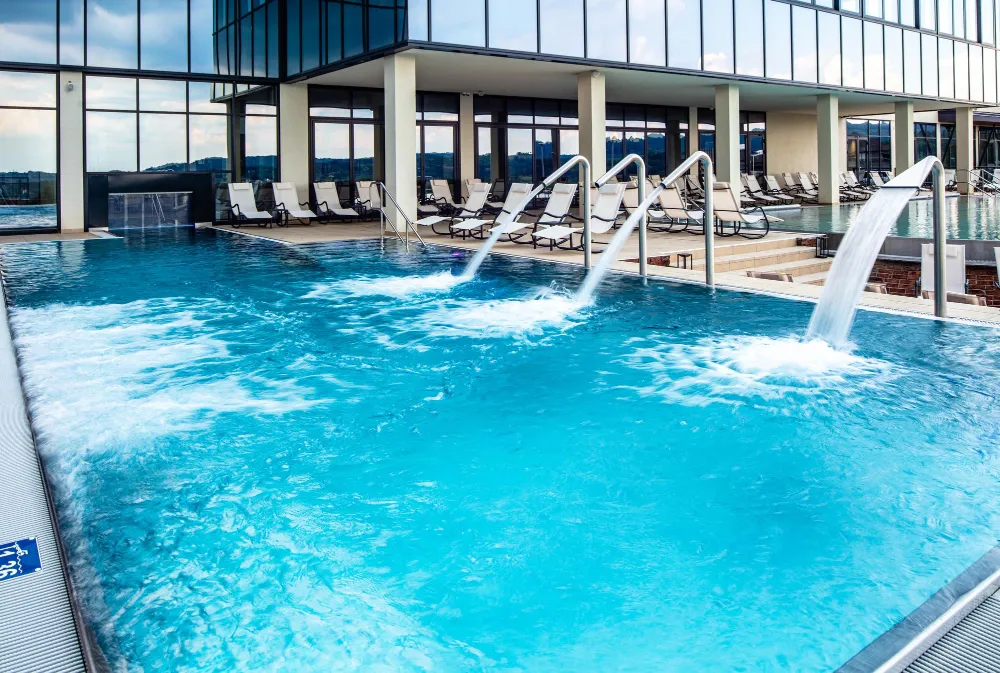
Unlike a residential pool, a pool provided for guests at a hotel, motel, guest house or holiday units is a "public swimming pool" under NSW law. That brings specific obligations around council notification, water quality, testing and record keeping, and authorised officers can enforce them.
This guide is based on the NSW Health Guidelines for Managing Water Quality in Public Swimming Pools and Spa Pools, published in August 2026 to replace the 2013 advisory document. It explains what applies, what "inspection-ready" looks like in practice, and the questions to ask whoever looks after your pool.
Why hotel pools are treated differently
Section 34 of the Public Health Act 2010 defines a public swimming pool or spa pool as one to which the public is admitted, whether free of charge, on payment of a fee or otherwise. It specifically includes pools:
provided at a hotel, motel or guest house, or at holiday units or a similar facility, for the use of guests
situated at private residential premises used for commercial purposes
at clubs, workplaces, schools and hospitals
Spa pools are covered too. Under the Act, a spa pool is any structure (other than a swimming pool) that holds more than 680 litres of water, is used for bathing, and injects jets of water or air into the water. In other words, almost every hotel spa.
Serviced apartments in strata buildings need careful checking. If guests of serviced or short-term-let apartments use the building's pool, it may be treated as a public pool even though residents use it too. Where the classification is uncertain, seek written clarification from your local council or independent legal advice.
Your core obligations
The occupier of premises with a public pool or spa must:
Give notice of the pool's existence to the local council. Councils keep a register of public swimming pools and spa pools in their area.
Comply with the prescribed operating requirements in Schedule 1 of the Public Health Regulation 2022. These set the disinfection, testing and record-keeping rules.
Disinfect the water so as to minimise the transmission of disease, and keep the pool surrounds, including toilets and change rooms, clean.
Under the Regulation, every public pool and spa must be fitted with an automated or continuous metered disinfectant dosing system, and only chlorine or bromine can be used as the primary disinfectant.
What happens if things go wrong? Failing to comply with the prescribed operating requirements is an offence and can lead to an improvement notice. Where there's a public health risk, a prohibition order can close the pool until the risk is fixed.
For a hotel, a forced closure is a compliance problem and a guest-experience problem at the same time.
Two separate registration systems
This catches many managers out. A hotel pool usually sits under two different systems, run under two different laws:
Public health (water quality) | Pool safety (barrier) | |
|---|---|---|
Law | Public Health Act 2010 and Public Health Regulation 2022 | Swimming Pools Act 1992 and Swimming Pools Regulation 2018 |
What you do | Notify your local council that the public pool or spa exists | Register the pool on the NSW Swimming Pool Register (Part 3A of the Act) |
What it covers | Disinfection, testing, water quality and records | Child-resistant barriers, gates and signage |
Who inspects | Authorised officers from council and NSW Health | Council barrier inspection program |
Being on one register doesn't put you on the other. Check both.
The water standards inspectors look for
Chlorine-disinfected pools and spas
Parameter | Situation | Requirement |
|---|---|---|
Free chlorine (pH 7.6 or below) | Outdoor pool without cyanuric acid | Min. 1.0 mg/L |
Outdoor pool with cyanuric acid | Min. 3.0 mg/L | |
Indoor pool | Min. 2.0 mg/L | |
Spa pool | Min. 2.0 mg/L | |
Free chlorine (pH above 7.6) | Outdoor pool without cyanuric acid | Min. 2.0 mg/L |
Outdoor pool with cyanuric acid | Min. 4.0 mg/L | |
Indoor pool | Min. 3.0 mg/L | |
Spa pool | Min. 3.0 mg/L | |
Combined chlorine | All | Max. 1.0 mg/L |
Total chlorine | All | Max. 10.0 mg/L |
pH | All | 7.0 – 7.8 |
Total alkalinity | All | 80 – 200 mg/L |
Cyanuric acid | Outdoor pools only, never in spas | Max. 50 mg/L |
Temperature | Any pool | Max. 38 °C |
Bromine-disinfected pools and spas
Parameter | Situation | Requirement |
|---|---|---|
Bromine | Outdoor pool | Min. 2.25 mg/L |
Indoor pool | Min. 4.5 mg/L | |
Spa pool | Min. 4.5 mg/L | |
Bromine | All bromine pools | Max. 9.0 mg/L |
pH | Bromine pools | 7.0 – 8.0 |
Total alkalinity | Bromine pools | 80 – 200 mg/L |
Temperature | Any pool | Max. 38 °C |
Disinfectant levels should be increased ahead of busy periods so they never drop below the minimum.
Source: Public Health Regulation 2022, Schedule 1; NSW Health Guidelines for Managing Water Quality in Public Swimming Pools and Spa Pools (2026), Tables 3-1 and 3-2.
How often you need to test
The 2026 guidelines separate what the Regulation requires from what NSW Health recommends.
Test | Required by the Regulation | Recommended by NSW Health |
|---|---|---|
Free chlorine or bromine, total chlorine, pH (continuous metered dosing) | Manual test once every day before opening | Test every 4 hours while the pool is in use |
Free chlorine or bromine, total chlorine, pH (automated dosing) | Record before opening and once during use, plus one manual test every day | Check and log the automated readings hourly |
Busy periods | Test more often when bather numbers, opening hours, pool depth or sunlight call for it | Manual test every 2 hours, or every hour near design capacity |
Total alkalinity | Daily (monthly if liquid chlorine or CO₂ pH control is used) | |
Cyanuric acid | Weekly (outdoor chlorine pools) | |
Ozone | Weekly (if used) | |
Turbidity / clarity | Daily | |
Water balance | Weekly | |
Total dissolved solids | Monthly |
How you test matters too. The 2026 guidelines recommend appropriately calibrated test instruments for manual testing. Domestic pool kits and test strips aren't recommended for public pools because they aren't as accurate.
Microbiological testing
Chemical tests show whether the disinfection is working right now. Microbiological testing shows whether it has been working. It's done by sending a water sample to a laboratory accredited by NATA (the National Association of Testing Authorities).
The 2026 guideline values for all pools and spas:
Test | Guideline value |
|---|---|
Escherichia coli | 0 CFU/100 mL |
Pseudomonas aeruginosa | 0 CFU/100 mL |
Heterotrophic colony count (HCC) | Less than 100 CFU/mL |
Microbiological testing is a NSW Health recommendation, not a requirement of the Regulation. Provided the Schedule 1 water quality requirements are met, NSW Health recommends monthly samples taken when the pool has a high bather load, and more frequent sampling when water quality has deteriorated, operations have changed significantly, the pool is heavily used or a new pool is commissioned.
If a result exceeds a guideline value, NSW Health's Exceedance of microbiological parameters response protocol sets out the steps. For a pool, that means checking disinfectant levels and closing the pool if they're below the Schedule 1 minimum. For a spa, it means draining, cleaning, disinfecting and refilling before reopening.
Records: your proof on inspection day
All public pools and spas must keep a record of the results of the testing required under Schedule 1 for at least six months. Logs should be filled out when samples are tested, kept on site or electronically, and be available for inspection. NSW Health publishes a monitoring log template.
Where an automated system records readings electronically, NSW Health recommends downloading them monthly and keeping them with the manual logs.
Our recommendation: keep logs for at least 12 months, stored where the duty manager can find them in under a minute.
Chemical handling and safety
Pool chemicals are also a work health and safety issue, regulated by SafeWork NSW under the Work Health and Safety Act 2011 and the Work Health and Safety Regulation 2025. The 2026 guidelines say:
staff handling pool chemicals should be trained to do so safely, with appropriate supervision
staff should wear the right personal protective equipment
safety instructions should be posted and visible in the chemical storage area and plant room
each chemical use should be documented
spills should be dealt with immediately, following a response plan and the safety data sheets (SDS)
only use pool chemicals registered with the APVMA (the Australian Pesticides and Veterinary Medicines Authority), following the label directions
Don't forget the barrier
Water quality and barrier safety are separate obligations. Under the Swimming Pools Act 1992:
the pool must be on the NSW Swimming Pool Register
it must have a child-resistant barrier that meets the Australian Standard (AS 1926) applying to the pool, which depends on when it was built
gates must self-close and latch, and never be propped open
a CPR sign must be displayed near the pool
Under section 22B of the Act, councils must inspect barriers at least once every three years for pools at tourist and visitor accommodation and premises with more than two dwellings. Pools with a valid certificate of compliance or relevant occupation certificate are excluded from this mandatory program.
An inspection-ready checklist for hotel managers
Council has been notified of every public pool and spa on the property
Every pool and spa is on the NSW Swimming Pool Register
An automated or continuous metered dosing system is fitted and working
Water is tested and recorded as Schedule 1 requires, with at least one manual test every day
Testing uses calibrated instruments, not test strips or domestic kits
Disinfectant, pH and combined chlorine stay within the Schedule 1 limits, especially in the spa
No pool or spa exceeds 38 °C
Microbiological samples are taken monthly at busy times by a NATA-accredited lab
At least six months of logs (ideally 12) are on hand
Chemicals are stored, handled and recorded safely, with SDS available
Barrier, gates and CPR sign are compliant and checked regularly
Staff know the NSW Health incident protocols for faecal, vomit and diarrhoeal incidents
Your pool provider reports problems before guests find them
How FAM helps hotels stay compliant
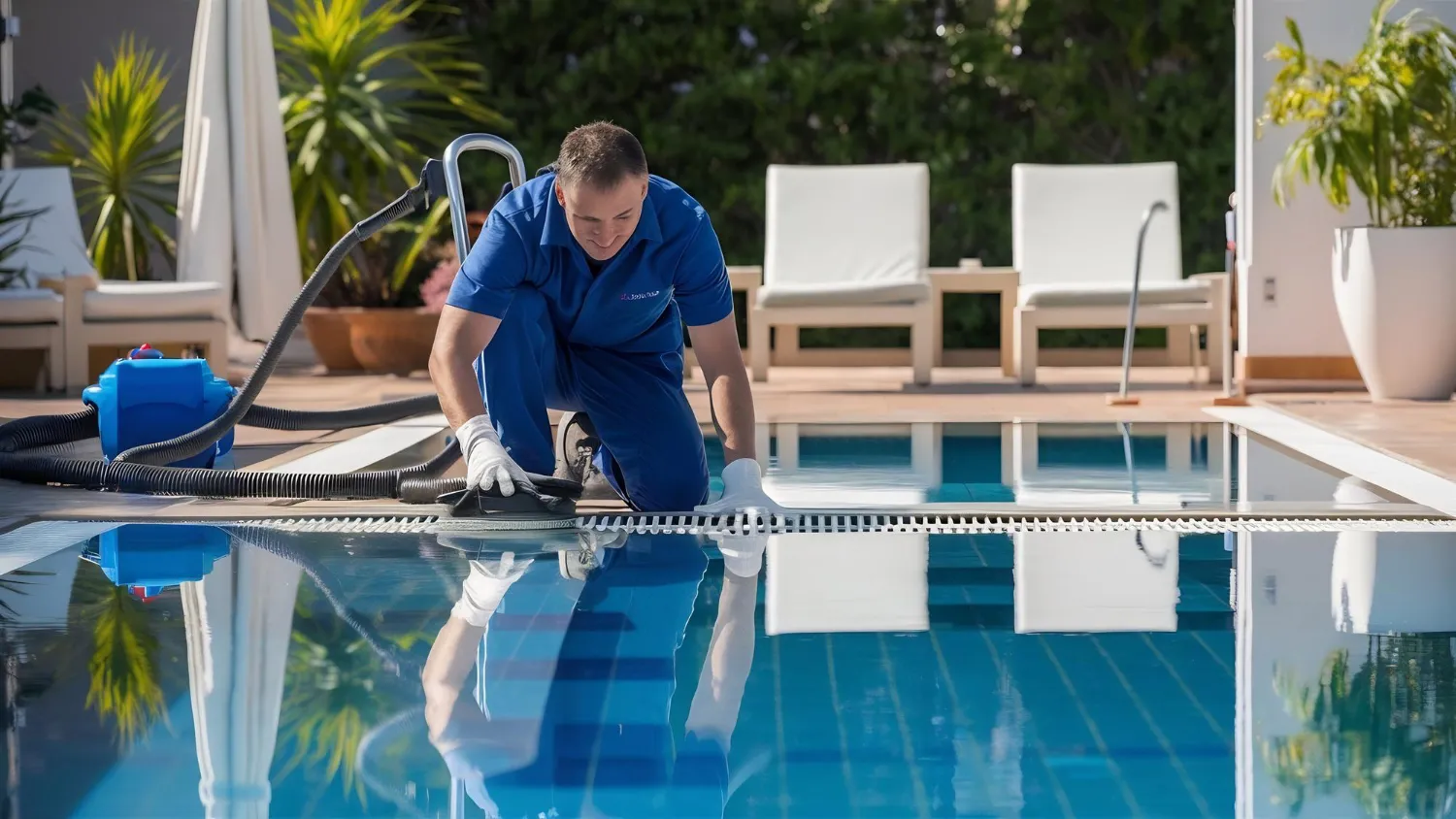
We look after pools and spas for hotels and serviced apartments across Sydney, with water testing recorded on professional digital testing devices, documented Safe Work Procedures, chemical registers and SDS on site, and visits planned with your team to keep disruption to guests to a minimum.
We support hotel operators in meeting their obligations, but engaging a pool service provider doesn't transfer the property's statutory responsibilities. The occupier of a public pool or spa remains responsible under the Public Health Act 2010 and Public Health Regulation 2022, including council notification, operating requirements, testing and record keeping, and incident response.
If you're not sure your pool would pass an inspection tomorrow, we're happy to come and check.
See our hotel pool care → or get a free quote →
This article is general information, not legal advice. Requirements can change. Check the current Public Health Regulation and speak to your local council about your property's obligations.
Sources
NSW Health — Guidelines for Managing Water Quality in Public Swimming Pools and Spa Pools (August 2026) · PDF
NSW Health — Public swimming pools and spa pools
NSW Health — Exceedance of microbiological parameters response protocol
NSW Health — Formed stool and vomit contamination response protocol
NSW Health — Diarrhoeal incident response protocol (chlorine without cyanuric acid)
NSW Legislation — Public Health Regulation 2022, Schedule 1
NSW Legislation — Public Health Act 2010
NSW Legislation — Swimming Pools Act 1992
NSW Government — Owning a pool or spa: your obligations
“Guests notice clear water. Inspectors look at the records. A well-run hotel pool needs both, every day.” – FAM Team